
Of a hippopotamus.
WTF I got to risk?
Doug Wilson sat down with NPR and gave a shockingly honest interview.
Well, it shocked me.
I really hadn’t realized that full-on theocracy was considered so acceptable in any U.S. social circle that they’d be this up-front about it when talking to a news outlet that’s very much not openly aligned with it.
But apparently it is, they are and he did.
I expect he thinks it went quite well.
And, frankly, it’s NPR; it’s not like they would be getting into arguments with an interview subject even if they personally disagree with him. They’re professionals.
But it’s the public response that’s a real problem.
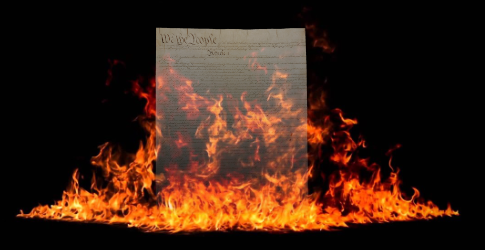
The most common response I’m seeing is calls to ban Wilson and his fellow wannabe theocrats. They are, after all, aspiring to overthrow a fundamental tenet of the U.S. Constitution: that the U.S., as a State, has no position on religious issues and may neither favor or punish any religious perspective.
This is the “paradox of tolerance“, first articulated by Karl Popper in 1945; Popper himself would almost certainly have agreed with the calls to ban theocratic movements like Wilson’s, since his solution to the paradox was that actual tolerance is impossible when faced with intolerance.
I like a lot of Popper’s work, but he was wrong on this one.
Rawls’ solution was to say that this only becomes a paradox when the intolerance rises to the level of an actual threat to the tolerant rather than mere rhetoric. This is much better, because it means the tolerant can intervene against intolerance movements only when they cross the line to breaking other (viewpoint-neutral) laws by presenting an actual threat.
I really like a lot of Rawls’ work, but even he’s still not entirely correct.
For that, you have to separate society from the State.
The State should, as with Rawls, only be allowed to intervene against intolerance movements when they present a real and direct threat against some part of the population.
Because the State is the thing that we all do together, and merely by virtue of geography is the thing that we all have to participate in. The State must therefore remain a neutral party to any disagreements among the populace, but the State is also obligated to protect every individual’s rights and to treat all individuals equally. So the State cannot tolerate an active movement threatening harm to part of the population.
Society, on the other hand, should follow Popper and reject the intolerant immediately, as soon as they start preaching, rather than waiting for them to present an immediate threat.
No individual has an obligation to listen to or do business with the intolerant.
But it’s really important to keep these two distinct.
The intolerant should be disputed, mocked and shunned; these are the tools of society. But they should not be dis-enfranchised, arrested or jailed; these are the tools of the State.
Using the tools of the State against your opponents in a cultural dispute is the actual problem that movements like Wilson’s present.


- Music Monday: “Sitting Pretty”, by Half Stack - 2026-10-13
- The Authoritarian Left: Wonkette Loses The Plot - 2026-09-22
- Impeach: A Wall-of-Shame For Congressional Democrats - 2026-09-16