
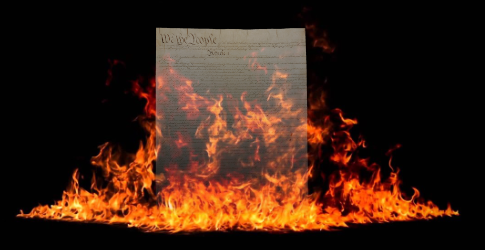
Kings and Queens step aside.
Democracy is not, in itself, a particularly good way of running a State; it’s complicated and messy and really an awful lot of work.
It’s only virtue is that it’s the most fair.
But even that’s only really true when it’s at its best; when the systems of a democracy are well-designed and carefully balanced.
A poorly designed democracy can have all the mess and effort of any democracy and yet still be as unfair as the worst autocracy.
But even the best-designed democratic systems will fail unless the voters work for it.
All democracies, at heart, depend on having a voting populace that:
- is educated well enough to understand the systems involved and the issues that need deciding
- is informed enough to know what the issues are and how the options available will function
- is engaged enough to participate in the system by maintaining their education and continually acquiring current information
- has the will and strength of mind necessary to make complicated and difficult decisions
Without all of these things, there’s no reason to think that any democracy can function at all, much less maintain its democratic systems.
The ignorant, the ill-informed, the apathetic and the weak can all be convinced to vote for pretty much anything by anyone who can gain influence over whatever media or social organizations they actually do engage with.
No voting populace will ever be perfect, just because no person can be.
Every person has holes in their knowledge and carries some misunderstandings, has times when they’re just checked out and times when they don’t have the energy to choose a better but harder way.
But a democracy doesn’t need every person to be at their best all the time; it just needs a majority of the people to be good enough most of the time.
And if it can’t manage that, then its democracy will fall.
American democracy is not doing well in this regard.
Studies show that only around a quarter of Americans can name their state’s governor or the Speaker of the House of Representatives. These numbers fluctuate pretty wildly between studies, which probably reflects whose names have been in the mainstream news most heavily in the days just before a poll is conducted, but the range is around 20% to 40%.
Even fewer can actually describe what those offices actually entail and what powers the State gives to the officeholders.
The percentage of eligible voters participating in national elections is around 60% to 65% in presidential election years and 35% to 40% in mid-term years.
And most research shows that voters’ choices are largely based on the effect they think their votes will have on themselves personally.
That’s at best concerning, and at worst catastrophic.
The best thing you can say about it is that the American voting public is ignorant, ill-informed, and makes their decisions largely for personal gain but at least a lot of them are apathetic enough that they don’t vote at all.
That’s a somewhat less than ideal situation for a democracy.
It is, in fact, a crisis; you could reasonably say that it’s the crisis from which all the others derive.
And, like with most things in a democracy, there are no easy solutions to this.
Only a widespread cultural expectation that each citizen take responsibility for their own education and information, in all the topics necessary for effective democratic participation from philosophy to economics and more is enough to make a democracy function well.
It is not easy.
But it’s necessary.
Because the alternative to ruling ourselves is being ruled by someone else, and the type of person who rises to the top in that kind of system is an absolute horror.


- Music Monday: “Sitting Pretty”, by Half Stack - 2026-10-13
- The Authoritarian Left: Wonkette Loses The Plot - 2026-09-22
- Impeach: A Wall-of-Shame For Congressional Democrats - 2026-09-16
- Failed Constitution Check: The Professoriat Weighs In
- The Old Dog Needs Some New Tricks: Learning From The Laboratories Of Democracy
- High Crimes And Misdemeanors: Everything He Does Is Illegal, So Is He Really President?
- Unitary Executive: Proving The Anti-Federalists Were Right
- You Should Read This: Will Trump Force America to Break Up?